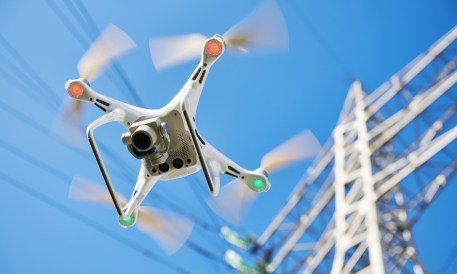
The traditional approach to infrastructure maintenance in the energy sector has relied heavily on scheduled inspections, often leading to undetected issues that can escalate into significant problems. However, a new wave of innovation is emerging, with companies like Percepto and Skydio leveraging artificial intelligence and autonomous drones to transform how energy assets are monitored. Percepto's platform, for instance, mimics the decision-making process of experienced human inspectors, allowing for a more nuanced and proactive approach to data collection. This capability not only enhances the quality of inspections but also increases the frequency, enabling operators to respond to equipment conditions in real time rather than adhering to a rigid schedule.
Skydio's autonomous drones have already been adopted by over 280 utility companies, including major players in the U.S. energy market. A notable case involved Southern California Edison, which utilized a Skydio drone to inspect substation equipment, uncovering critical issues that could have led to a month-long outage. This shift from time-based to condition-based maintenance represents a significant evolution in operational efficiency, allowing companies to address potential failures before they occur.
For lenders, the implications are profound. Traditionally, financial institutions assessed the risk of energy assets based on infrequent inspections, often leading to a lack of visibility into the actual condition of collateral backing loans. With continuous monitoring enabled by drone technology, lenders can now price risk based on up-to-date evidence, fundamentally altering the risk landscape. This transition not only enhances the safety and reliability of energy infrastructure but also opens new avenues for capital allocation in an industry increasingly reliant on data-driven decision-making.
Skydio's autonomous drones have already been adopted by over 280 utility companies, including major players in the U.S. energy market. A notable case involved Southern California Edison, which utilized a Skydio drone to inspect substation equipment, uncovering critical issues that could have led to a month-long outage. This shift from time-based to condition-based maintenance represents a significant evolution in operational efficiency, allowing companies to address potential failures before they occur.
For lenders, the implications are profound. Traditionally, financial institutions assessed the risk of energy assets based on infrequent inspections, often leading to a lack of visibility into the actual condition of collateral backing loans. With continuous monitoring enabled by drone technology, lenders can now price risk based on up-to-date evidence, fundamentally altering the risk landscape. This transition not only enhances the safety and reliability of energy infrastructure but also opens new avenues for capital allocation in an industry increasingly reliant on data-driven decision-making.
Source: PYMNTS