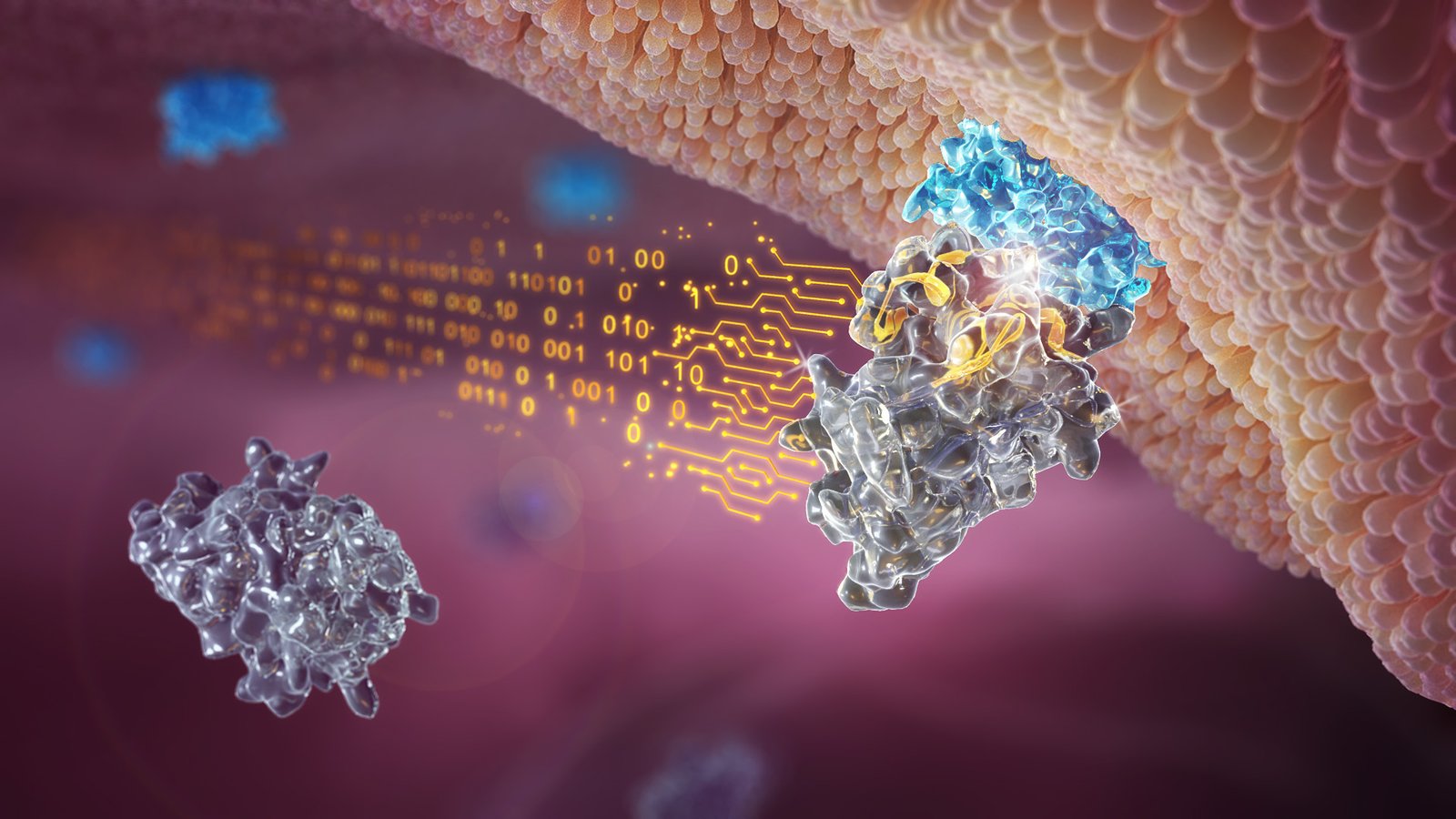
The pharmaceutical industry is witnessing a paradigm shift as artificial intelligence (AI) increasingly becomes integral to the design and development of biologic medicines. Traditionally, the journey from drug conception to market is fraught with high costs and lengthy timelines, often stretching over several years with a high failure rate. However, companies like AstraZeneca are leveraging AI to streamline this process, enhancing productivity and innovation while reducing cycle times. By employing a build-measure-learn approach, AI assists in generating and prioritizing candidate molecules, allowing scientists to focus resources on the most promising options, thereby minimizing dead ends and accelerating the path to viable treatments.
AI's role extends beyond mere acceleration; it is also facilitating the discovery of novel classes of medicines that can target multiple disease pathways simultaneously. This capability is crucial as the next generation of biologics aims to deliver precise therapeutic payloads to specific cells, a feat that requires optimization across numerous variables. AstraZeneca's investment in AI-driven models is poised to enable the creation of multi-specific biologics, transforming the landscape of drug discovery and potentially making previously untreatable conditions manageable.
The efficacy of AI models hinges on the quality of the underlying data. AstraZeneca emphasizes the importance of proprietary, multimodal datasets that encompass a wide array of biological information, from molecular structures to safety profiles. This data-driven approach not only enhances the training of AI models but also supports the development of a 'lab of the future'—a facility where AI and robotic automation collaborate to create a closed-loop discovery system. This innovative setup aims to generate vast amounts of AI-ready data, significantly outpacing traditional workflows in drug development.
Looking ahead, the ultimate goal is to achieve 'de novo' design, where AI can autonomously generate entirely new protein sequences tailored to specific therapeutic properties. Achieving this vision will require advancements in data standardization, evaluation benchmarks, and interdisciplinary expertise at the intersection of machine learning and biology. As AstraZeneca and similar organizations continue to refine their AI capabilities, the potential to develop groundbreaking treatments for a range of diseases becomes increasingly tangible, underscoring the transformative impact of AI in the pharmaceutical sector.
AI's role extends beyond mere acceleration; it is also facilitating the discovery of novel classes of medicines that can target multiple disease pathways simultaneously. This capability is crucial as the next generation of biologics aims to deliver precise therapeutic payloads to specific cells, a feat that requires optimization across numerous variables. AstraZeneca's investment in AI-driven models is poised to enable the creation of multi-specific biologics, transforming the landscape of drug discovery and potentially making previously untreatable conditions manageable.
The efficacy of AI models hinges on the quality of the underlying data. AstraZeneca emphasizes the importance of proprietary, multimodal datasets that encompass a wide array of biological information, from molecular structures to safety profiles. This data-driven approach not only enhances the training of AI models but also supports the development of a 'lab of the future'—a facility where AI and robotic automation collaborate to create a closed-loop discovery system. This innovative setup aims to generate vast amounts of AI-ready data, significantly outpacing traditional workflows in drug development.
Looking ahead, the ultimate goal is to achieve 'de novo' design, where AI can autonomously generate entirely new protein sequences tailored to specific therapeutic properties. Achieving this vision will require advancements in data standardization, evaluation benchmarks, and interdisciplinary expertise at the intersection of machine learning and biology. As AstraZeneca and similar organizations continue to refine their AI capabilities, the potential to develop groundbreaking treatments for a range of diseases becomes increasingly tangible, underscoring the transformative impact of AI in the pharmaceutical sector.
Source: MIT Tech Review