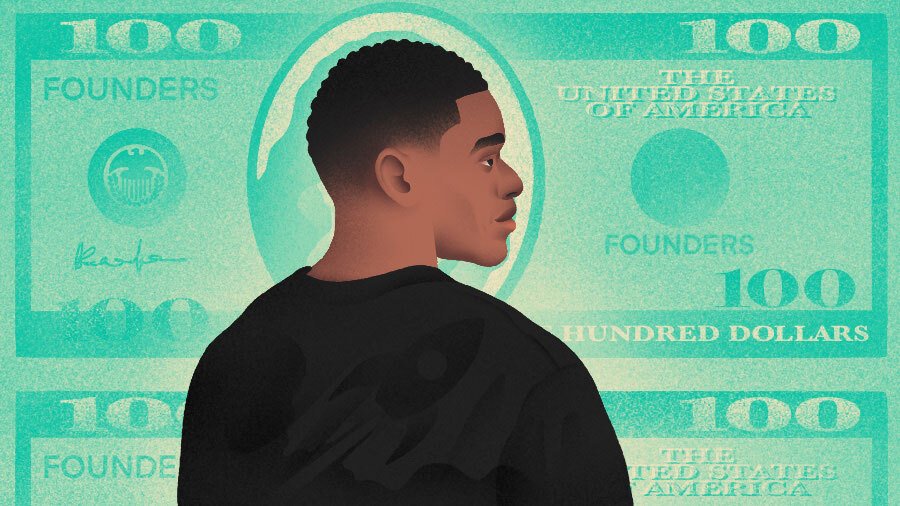
In 2026, the narrative surrounding Black founders and venture capital is evolving, particularly as AI technology reshapes the startup landscape. While the cost of launching software companies has decreased significantly, the challenge of scaling remains daunting. Founders must now secure substantial seed funding to meet the rigorous expectations of Series A investors, who prioritize proven traction over mere concepts. This shift underscores a pressing issue for Black entrepreneurs, who continue to receive a disproportionately small share of venture capital funding, limiting their ability to build scalable businesses.
Data from Crunchbase reveals a stark reality: Black-founded startups garnered merely $942 million in venture funding in 2025, a mere 0.32% of total U.S. venture capital. This figure marks a significant decline from previous years, particularly the post-George Floyd investment surge in 2021, when Black founders raised $5.2 billion. Although 2026 has shown some promise, with approximately $643 million raised by Black-founded startups by late May, much of this growth is attributed to a few large financing rounds, indicating that the broader ecosystem remains challenging.
The crux of the issue lies not just in the availability of capital, but in the structure of funding rounds. Many Black founders struggle to secure fully funded seed rounds, leaving them ill-equipped to achieve the milestones necessary for institutional Series A financing. In an era where product cycles are accelerating, the time lost in continuous fundraising can be detrimental, hindering their ability to focus on customer acquisition and product development.
Oversubscribed seed rounds are emerging as a vital strategic advantage for Black founders, providing the necessary flexibility to navigate challenging fundraising environments and invest in growth opportunities. The venture capital landscape must shift its focus from merely increasing investment in Black founders to ensuring they have adequate resources to compete effectively. In the AI economy, success will not solely depend on speed but on the sustained ability to build and innovate over time.
Data from Crunchbase reveals a stark reality: Black-founded startups garnered merely $942 million in venture funding in 2025, a mere 0.32% of total U.S. venture capital. This figure marks a significant decline from previous years, particularly the post-George Floyd investment surge in 2021, when Black founders raised $5.2 billion. Although 2026 has shown some promise, with approximately $643 million raised by Black-founded startups by late May, much of this growth is attributed to a few large financing rounds, indicating that the broader ecosystem remains challenging.
The crux of the issue lies not just in the availability of capital, but in the structure of funding rounds. Many Black founders struggle to secure fully funded seed rounds, leaving them ill-equipped to achieve the milestones necessary for institutional Series A financing. In an era where product cycles are accelerating, the time lost in continuous fundraising can be detrimental, hindering their ability to focus on customer acquisition and product development.
Oversubscribed seed rounds are emerging as a vital strategic advantage for Black founders, providing the necessary flexibility to navigate challenging fundraising environments and invest in growth opportunities. The venture capital landscape must shift its focus from merely increasing investment in Black founders to ensuring they have adequate resources to compete effectively. In the AI economy, success will not solely depend on speed but on the sustained ability to build and innovate over time.
Source: Crunchbase