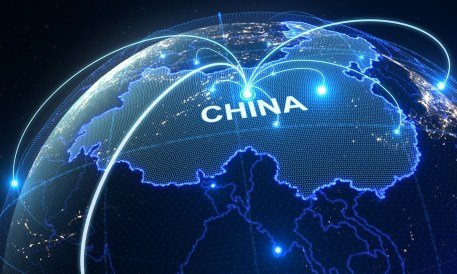
In a significant development for the global digital economy, 29 nations have officially launched the World Artificial Intelligence Cooperation Organization (WAICO) in Shanghai. This initiative, spearheaded by China, aims to institutionalize governance over emerging technologies and promote equitable AI development. The signing ceremony, attended by Chinese Foreign Minister Wang Yi and representatives from founding member states such as Russia, Kazakhstan, and Pakistan, underscores Beijing's ambition to lead in the AI sector while fostering international collaboration under the principles of the United Nations Charter. WAICO's headquarters in Shanghai will serve as a hub for this new intergovernmental body, which is positioned as a counterweight to Western-led technological frameworks.
The formation of WAICO coincides with the ongoing World Artificial Intelligence Conference, where Chinese officials are advocating for a model of 'sovereign AI.' This approach emphasizes low-cost, open-source AI technologies as a means to address global technological disparities, particularly in Southeast Asia and developing nations. The launch of WAICO is indicative of a broader strategy to create a multi-polar technological landscape, as evidenced by Huawei's introduction of the Atlas 950 SuperPoD, an AI computing cluster designed to operate independently of U.S. semiconductor technology.
President Xi Jinping's vision links the future of China's economic growth to the integration of AI across various sectors, highlighting the strategic importance of this initiative. The presence of UN Secretary-General Antonio Guterres at the launch further emphasizes the global stakes involved in establishing a new governance framework for AI. However, the absence of major U.S. tech companies from the summit signals a growing divide in global governance structures, raising questions about the future of digital standards and AI applications in different markets.
For investors and stakeholders in the Gulf region, WAICO's emergence could reshape the competitive landscape for AI and fintech solutions. As countries align themselves with either the U.S. or Chinese models of governance, capital allocation and market dynamics may increasingly reflect these geopolitical affiliations. This shift could present both challenges and opportunities for startups and financial institutions in the GCC, as they navigate a potentially bifurcated technological environment that influences investment strategies and innovation pathways.
The formation of WAICO coincides with the ongoing World Artificial Intelligence Conference, where Chinese officials are advocating for a model of 'sovereign AI.' This approach emphasizes low-cost, open-source AI technologies as a means to address global technological disparities, particularly in Southeast Asia and developing nations. The launch of WAICO is indicative of a broader strategy to create a multi-polar technological landscape, as evidenced by Huawei's introduction of the Atlas 950 SuperPoD, an AI computing cluster designed to operate independently of U.S. semiconductor technology.
President Xi Jinping's vision links the future of China's economic growth to the integration of AI across various sectors, highlighting the strategic importance of this initiative. The presence of UN Secretary-General Antonio Guterres at the launch further emphasizes the global stakes involved in establishing a new governance framework for AI. However, the absence of major U.S. tech companies from the summit signals a growing divide in global governance structures, raising questions about the future of digital standards and AI applications in different markets.
For investors and stakeholders in the Gulf region, WAICO's emergence could reshape the competitive landscape for AI and fintech solutions. As countries align themselves with either the U.S. or Chinese models of governance, capital allocation and market dynamics may increasingly reflect these geopolitical affiliations. This shift could present both challenges and opportunities for startups and financial institutions in the GCC, as they navigate a potentially bifurcated technological environment that influences investment strategies and innovation pathways.
Source: PYMNTS