A new report from PYMNTS Intelligence reveals that a staggering 70% of credit union members lack adequate awareness of stablecoins, often grouping them with cryptocurrencies despite their distinct functions. The study, titled 'The Wallet Effect: How Credit Unions Can Close the Digital Currency Access Gap,' indicates that while interest in digital currencies is notably rising among younger demographics, their understanding of these assets remains limited. This disconnect poses both a challenge and an opportunity for credit unions, which can leverage their trusted status to educate members about the nuances of digital assets and their potential applications in everyday transactions.
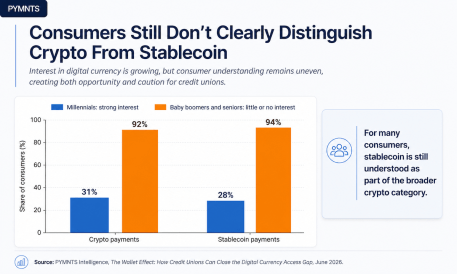
The report highlights that 31% of millennials express a strong interest in using cryptocurrency for payments, while 28% show similar enthusiasm for stablecoins, indicating a close correlation in consumer interest. However, a stark contrast emerges among older generations, with 94% of baby boomers and seniors showing little to no interest in stablecoin payments. This suggests that stablecoins have yet to carve out a distinct identity in the consumer psyche, overshadowed by the broader recognition of cryptocurrencies fueled by extensive media coverage and investment apps.
Despite the current lack of understanding, the report suggests a pathway forward for credit unions by emphasizing measured engagement with members. As digital asset habits evolve, financial institutions have the opportunity to clarify the differences between cryptocurrencies and stablecoins, addressing potential risks while showcasing practical use cases. The findings also indicate that access to digital wallets can significantly enhance interest in stablecoin payments, with engagement rising from 5% to 12% when integrated into familiar payment tools. This underscores the potential for credit unions to innovate their service offerings by combining education with accessible technology and strategic partnerships.
In a rapidly changing financial landscape, the insights from this report are particularly relevant for investors and startups in the fintech sector. As consumer habits around digital currencies continue to develop, there is a pressing need for financial institutions to adapt and educate their clientele. This shift not only opens avenues for new product offerings but also highlights the importance of building consumer trust in digital assets, which could ultimately reshape market dynamics and capital allocation strategies across the Gulf region.
The report highlights that 31% of millennials express a strong interest in using cryptocurrency for payments, while 28% show similar enthusiasm for stablecoins, indicating a close correlation in consumer interest. However, a stark contrast emerges among older generations, with 94% of baby boomers and seniors showing little to no interest in stablecoin payments. This suggests that stablecoins have yet to carve out a distinct identity in the consumer psyche, overshadowed by the broader recognition of cryptocurrencies fueled by extensive media coverage and investment apps.
Despite the current lack of understanding, the report suggests a pathway forward for credit unions by emphasizing measured engagement with members. As digital asset habits evolve, financial institutions have the opportunity to clarify the differences between cryptocurrencies and stablecoins, addressing potential risks while showcasing practical use cases. The findings also indicate that access to digital wallets can significantly enhance interest in stablecoin payments, with engagement rising from 5% to 12% when integrated into familiar payment tools. This underscores the potential for credit unions to innovate their service offerings by combining education with accessible technology and strategic partnerships.
In a rapidly changing financial landscape, the insights from this report are particularly relevant for investors and startups in the fintech sector. As consumer habits around digital currencies continue to develop, there is a pressing need for financial institutions to adapt and educate their clientele. This shift not only opens avenues for new product offerings but also highlights the importance of building consumer trust in digital assets, which could ultimately reshape market dynamics and capital allocation strategies across the Gulf region.
Source: PYMNTS