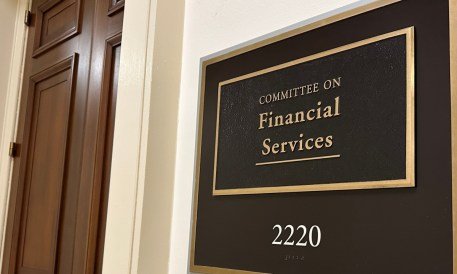
In a significant report released by the House Financial Services Committee, Republicans are calling for an expanded use of artificial intelligence (AI) to combat the rising tide of financial fraud. The report, which follows a year-long investigation into financial scams, emphasizes that while AI has empowered criminals to execute increasingly sophisticated scams, it also offers financial institutions and government agencies advanced tools for detecting and preventing such fraud. The committee's findings underscore the urgent need for policymakers to support the integration of AI-powered technologies into existing fraud prevention frameworks, as the economic impact of financial fraud continues to escalate, with U.S. consumers reporting over $15.9 billion in losses in 2025 alone, according to the Federal Trade Commission.
Committee Chairman French Hill (R-Ark.) articulated the necessity for law enforcement and financial entities to evolve alongside criminal tactics, stating that “as fraudsters become more sophisticated, we must ensure that those empowered to prevent and respond to fraud and scams deploy the same tools.” The report outlines how AI can be harnessed to create personalized, convincing scams, while simultaneously serving as a crucial asset in fraud detection efforts. It highlights successful applications of AI in government programs, such as the Centers for Medicare and Medicaid Services, which reportedly prevented over $2 billion in improper payments through AI-driven fraud detection.
The committee advocates for legislative measures to facilitate the broader adoption of AI technologies in combating financial fraud. Key recommendations include advancing the Bank Fraud Technology Advancement Act and the AI PLAN Act, both aimed at enhancing the capabilities of federal agencies and community banks in utilizing AI for fraud prevention. The report stresses the importance of not only deploying AI tools but also ensuring robust oversight and evaluation of their effectiveness, thereby fostering a more secure financial environment.
This report reflects a proactive stance on the part of legislators to leverage AI's potential while addressing the challenges posed by its misuse. By encouraging the adoption of AI in fraud prevention, the committee aims to equip financial institutions and regulators with the necessary resources to counteract evolving threats effectively. As the landscape of financial crime continues to shift, the integration of AI into fraud detection strategies could redefine the operational frameworks of financial services, making them more resilient against sophisticated fraud schemes.
Committee Chairman French Hill (R-Ark.) articulated the necessity for law enforcement and financial entities to evolve alongside criminal tactics, stating that “as fraudsters become more sophisticated, we must ensure that those empowered to prevent and respond to fraud and scams deploy the same tools.” The report outlines how AI can be harnessed to create personalized, convincing scams, while simultaneously serving as a crucial asset in fraud detection efforts. It highlights successful applications of AI in government programs, such as the Centers for Medicare and Medicaid Services, which reportedly prevented over $2 billion in improper payments through AI-driven fraud detection.
The committee advocates for legislative measures to facilitate the broader adoption of AI technologies in combating financial fraud. Key recommendations include advancing the Bank Fraud Technology Advancement Act and the AI PLAN Act, both aimed at enhancing the capabilities of federal agencies and community banks in utilizing AI for fraud prevention. The report stresses the importance of not only deploying AI tools but also ensuring robust oversight and evaluation of their effectiveness, thereby fostering a more secure financial environment.
This report reflects a proactive stance on the part of legislators to leverage AI's potential while addressing the challenges posed by its misuse. By encouraging the adoption of AI in fraud prevention, the committee aims to equip financial institutions and regulators with the necessary resources to counteract evolving threats effectively. As the landscape of financial crime continues to shift, the integration of AI into fraud detection strategies could redefine the operational frameworks of financial services, making them more resilient against sophisticated fraud schemes.
Source: PYMNTS