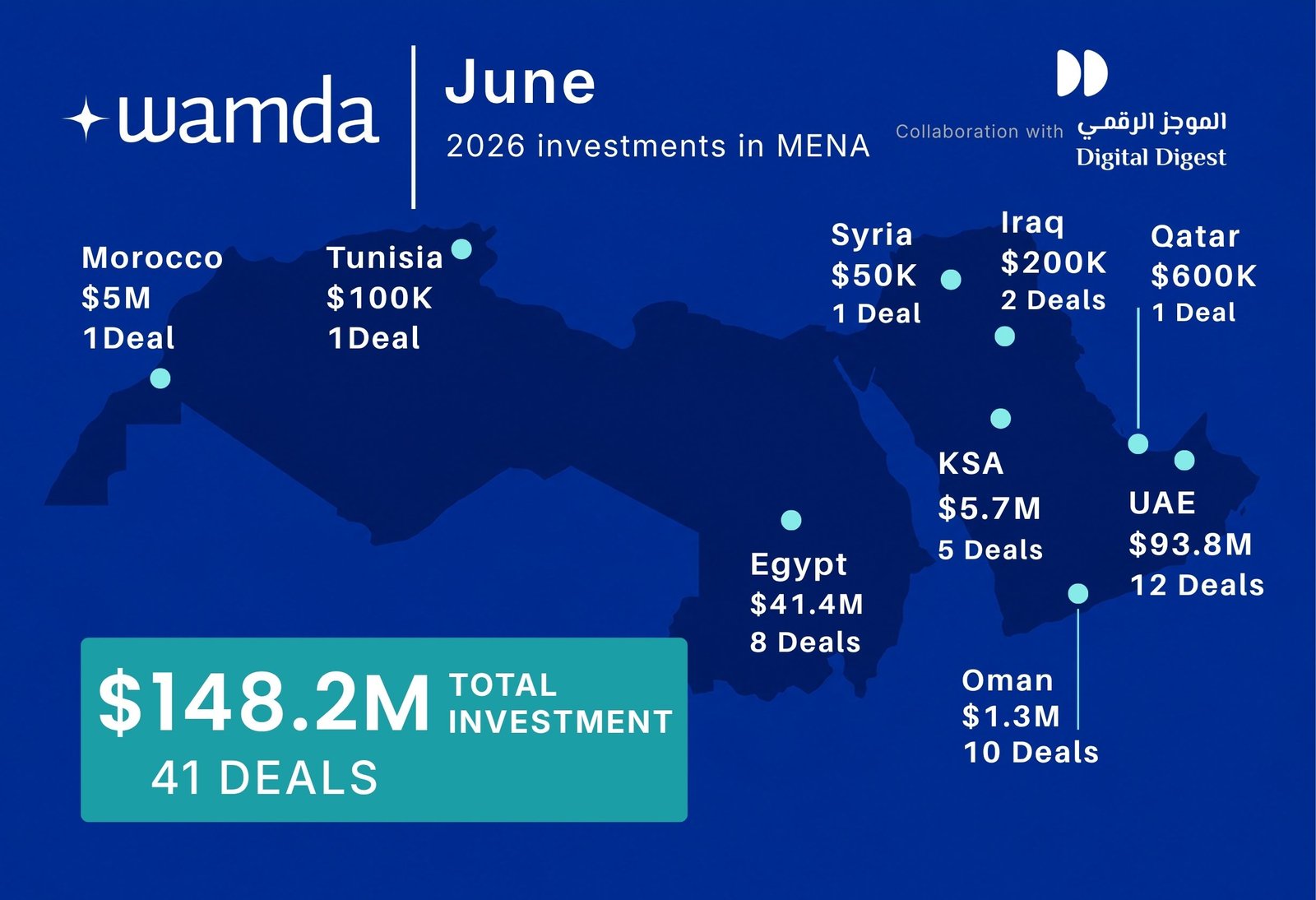
Investment activity across the Middle East and North Africa (MENA) experienced a significant downturn in June 2026, as 41 startups raised a total of $148.2 million, reflecting a 76% drop from May. However, this figure represents a remarkable 190% increase compared to June 2025, indicating a year-on-year recovery. The month-on-month decline, while stark, is somewhat mitigated when excluding debt financing, which narrows the gap to just 15%. Notably, the number of transactions rose from 33 in May to 41 in June, suggesting that deal-making activity is picking up even amid broader economic challenges.
Geographically, the United Arab Emirates retained its status as the leading market in the region, with 12 startups securing $93.8 million. Meanwhile, Egypt has emerged as a significant player, climbing to second place with eight startups raising $41.4 million, buoyed by signs of economic stabilization and a resurgence in tourism. Saudi Arabia, typically a frontrunner in startup funding, fell to third place with only five startups raising $5.7 million. Morocco made a comeback with proptech startup Agenz raising $5 million, while Oman recorded activity from 10 startups totaling $1.3 million, reflecting the positive impact of local accelerator programs.
Sector-wise, enterprise AI took the lead, attracting $76 million from just two startups, while fintech maintained its position as the second most funded sector, with 13 startups securing $43.5 million. The funding landscape also highlighted a concerning trend: no late-stage equity rounds were recorded, with early-stage startups dominating investor interest. Business-to-business models continued to attract the lion's share of investment, drawing $96.3 million across 27 deals, whereas consumer-focused startups struggled to cross the $50 million threshold.
The ongoing funding gap between male and female founders persists, with female-led startups securing a mere $260,000 across two deals. This disparity raises important questions about inclusivity and the distribution of capital within the startup ecosystem. As the region navigates geopolitical uncertainties and investor caution, the latest funding trends suggest a cautious optimism, with the potential for a stronger second half of 2026 should conditions stabilize further. Investors and founders alike will be closely monitoring these developments as they shape the future of the MENA startup landscape.
Geographically, the United Arab Emirates retained its status as the leading market in the region, with 12 startups securing $93.8 million. Meanwhile, Egypt has emerged as a significant player, climbing to second place with eight startups raising $41.4 million, buoyed by signs of economic stabilization and a resurgence in tourism. Saudi Arabia, typically a frontrunner in startup funding, fell to third place with only five startups raising $5.7 million. Morocco made a comeback with proptech startup Agenz raising $5 million, while Oman recorded activity from 10 startups totaling $1.3 million, reflecting the positive impact of local accelerator programs.
Sector-wise, enterprise AI took the lead, attracting $76 million from just two startups, while fintech maintained its position as the second most funded sector, with 13 startups securing $43.5 million. The funding landscape also highlighted a concerning trend: no late-stage equity rounds were recorded, with early-stage startups dominating investor interest. Business-to-business models continued to attract the lion's share of investment, drawing $96.3 million across 27 deals, whereas consumer-focused startups struggled to cross the $50 million threshold.
The ongoing funding gap between male and female founders persists, with female-led startups securing a mere $260,000 across two deals. This disparity raises important questions about inclusivity and the distribution of capital within the startup ecosystem. As the region navigates geopolitical uncertainties and investor caution, the latest funding trends suggest a cautious optimism, with the potential for a stronger second half of 2026 should conditions stabilize further. Investors and founders alike will be closely monitoring these developments as they shape the future of the MENA startup landscape.
Source: Wamda