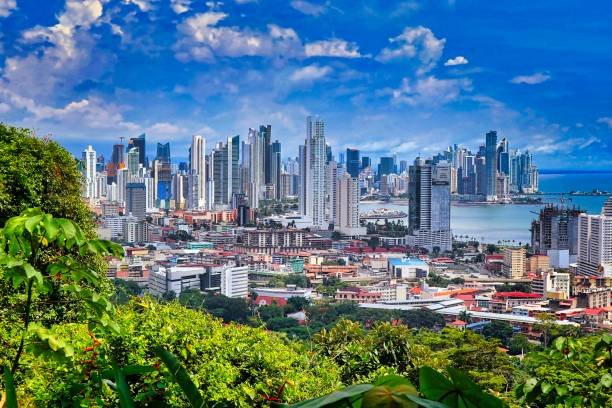
Panama is on the cusp of a fintech revolution that aligns with its longstanding role as a pivotal trade conduit. With the Panama Canal facilitating the movement of goods between continents, the country is leveraging its strategic geographical position to foster a robust fintech ecosystem aimed at enhancing international commerce. Unlike many of its Latin American counterparts, which primarily focus on financial inclusion, Panama's fintech landscape is evolving to streamline cross-border payments, trade finance, and compliance technology, essential for the fast-paced world of global logistics. The International Monetary Fund projects Panama's economy to reach approximately $102 billion in 2026, with a GDP per capita of around $22,000, underscoring its status as one of Central America's wealthiest nations and a burgeoning financial center in Latin America.
The country's banking sector, home to over 50 domestic and international banks, is uniquely positioned to support fintech innovations that cater to international business needs. As global supply chains digitize, services such as digital invoicing, real-time payments, and automated foreign exchange are becoming critical for importers and exporters alike. The Superintendency of Banks of Panama is actively enhancing regulatory frameworks to encourage innovation while ensuring compliance, creating a conducive environment for fintech growth.
Consumer behavior in Panama is also shifting towards digital solutions, with banks expanding their offerings in mobile banking and contactless payments. This transition is supported by a high smartphone penetration rate and a solid telecommunications infrastructure. Fintech firms are increasingly collaborating with traditional banks to modernize payment systems, thereby enhancing customer experiences and facilitating smoother transactions for both domestic and international commerce. The Panama Fintech Association plays a crucial role in fostering collaboration among regulators, financial institutions, and tech companies, positioning the nation as a regional innovation hub.
As Panama continues to strengthen its anti-money laundering and compliance frameworks, the fintech sector is poised to gain a competitive edge in the global market. The recent removal of Panama from the Financial Action Task Force's increased monitoring list signals significant progress in regulatory credibility, which is vital for attracting international fintech players. Ultimately, Panama's fintech future is closely intertwined with its logistics capabilities, as digital finance becomes an integral layer of infrastructure supporting one of the world's most important trading crossroads. By focusing on enhancing its financial technology platform, Panama aims to solidify its role as a facilitator of international commerce across the Americas.
The country's banking sector, home to over 50 domestic and international banks, is uniquely positioned to support fintech innovations that cater to international business needs. As global supply chains digitize, services such as digital invoicing, real-time payments, and automated foreign exchange are becoming critical for importers and exporters alike. The Superintendency of Banks of Panama is actively enhancing regulatory frameworks to encourage innovation while ensuring compliance, creating a conducive environment for fintech growth.
Consumer behavior in Panama is also shifting towards digital solutions, with banks expanding their offerings in mobile banking and contactless payments. This transition is supported by a high smartphone penetration rate and a solid telecommunications infrastructure. Fintech firms are increasingly collaborating with traditional banks to modernize payment systems, thereby enhancing customer experiences and facilitating smoother transactions for both domestic and international commerce. The Panama Fintech Association plays a crucial role in fostering collaboration among regulators, financial institutions, and tech companies, positioning the nation as a regional innovation hub.
As Panama continues to strengthen its anti-money laundering and compliance frameworks, the fintech sector is poised to gain a competitive edge in the global market. The recent removal of Panama from the Financial Action Task Force's increased monitoring list signals significant progress in regulatory credibility, which is vital for attracting international fintech players. Ultimately, Panama's fintech future is closely intertwined with its logistics capabilities, as digital finance becomes an integral layer of infrastructure supporting one of the world's most important trading crossroads. By focusing on enhancing its financial technology platform, Panama aims to solidify its role as a facilitator of international commerce across the Americas.
Source: The Fintech Times