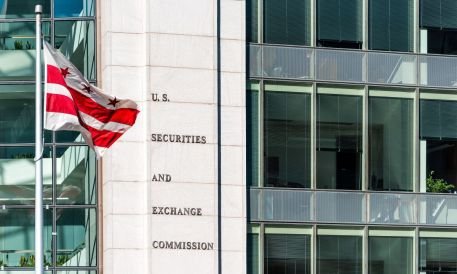
The U.S. Securities and Exchange Commission (SEC) has unveiled a report to Congress that presents a series of policy recommendations designed to enhance capital-raising mechanisms for startups and small businesses. This initiative stems from discussions held during the SEC's 45th Annual Small Business Forum, which convened stakeholders from both the public and private sectors on March 9. The report emphasizes a collaborative approach, with participants voting on priority recommendations aimed at modernizing the regulatory framework governing capital formation.
Among the key proposals is the expansion of the accredited investor definition, which would incorporate additional measures of sophistication to broaden access to investment opportunities. Additionally, the forum participants advocated for the modernization of regulations governing crypto assets classified as securities, reflecting the growing importance of digital assets in the investment landscape. A significant recommendation is the introduction of a federal friends-and-family exemption that would preempt state blue sky laws, facilitating easier capital raising for startups. Furthermore, revisions to Regulation Crowdfunding are suggested, with a proposed increase in the annual fundraising limit from $5 million to $20 million, a move that could significantly benefit early-stage companies seeking to scale.
For growth-stage companies, participants called for the creation of a new private fund exemption aimed at fostering community-based investing through smaller or regional funds. The recommendations also include measures to streamline the transition from private to public markets, easing compliance burdens for emerging fund managers, and advancing legislative efforts like the INVEST Act to bolster capital formation. The focus on improving public trading conditions for small-cap companies, particularly those trading over-the-counter, highlights the SEC's commitment to enhancing market transparency and accessibility.
These recommendations, if adopted, could lead to a more favorable environment for startups and small businesses, potentially attracting increased investment from both domestic and international investors, including those in the Gulf region. The proposed changes signal a shift towards a more inclusive capital-raising ecosystem, which may resonate with the growing number of venture capital firms and investors looking to tap into innovative sectors such as fintech and AI. With the Gulf region's burgeoning startup landscape, these developments in U.S. regulatory policy could have ripple effects, influencing investment strategies and capital allocation across borders.
Among the key proposals is the expansion of the accredited investor definition, which would incorporate additional measures of sophistication to broaden access to investment opportunities. Additionally, the forum participants advocated for the modernization of regulations governing crypto assets classified as securities, reflecting the growing importance of digital assets in the investment landscape. A significant recommendation is the introduction of a federal friends-and-family exemption that would preempt state blue sky laws, facilitating easier capital raising for startups. Furthermore, revisions to Regulation Crowdfunding are suggested, with a proposed increase in the annual fundraising limit from $5 million to $20 million, a move that could significantly benefit early-stage companies seeking to scale.
For growth-stage companies, participants called for the creation of a new private fund exemption aimed at fostering community-based investing through smaller or regional funds. The recommendations also include measures to streamline the transition from private to public markets, easing compliance burdens for emerging fund managers, and advancing legislative efforts like the INVEST Act to bolster capital formation. The focus on improving public trading conditions for small-cap companies, particularly those trading over-the-counter, highlights the SEC's commitment to enhancing market transparency and accessibility.
These recommendations, if adopted, could lead to a more favorable environment for startups and small businesses, potentially attracting increased investment from both domestic and international investors, including those in the Gulf region. The proposed changes signal a shift towards a more inclusive capital-raising ecosystem, which may resonate with the growing number of venture capital firms and investors looking to tap into innovative sectors such as fintech and AI. With the Gulf region's burgeoning startup landscape, these developments in U.S. regulatory policy could have ripple effects, influencing investment strategies and capital allocation across borders.
Source: PYMNTS