
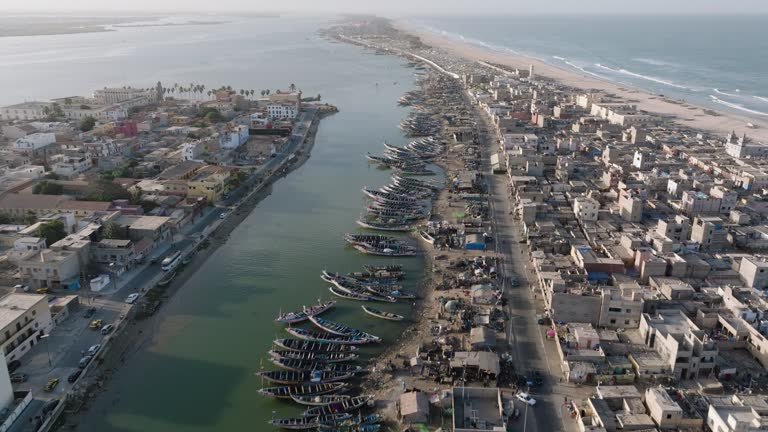
In Senegal, the fintech revolution is not merely about convenience; it is fundamentally reshaping the financial landscape by integrating millions into the formal financial system for the first time. Unlike many developed nations where banking convenience is the primary focus, Senegal's digital finance ecosystem is built around mobile technology, allowing for a wide array of financial services to flourish. As the economy approaches $40.5 billion with a GDP per capita surpassing $2,050, mobile money has emerged as a critical driver of financial inclusion, entrepreneurship, and overall economic growth. The capital city of Dakar serves as the commercial hub, supported by established banks and a burgeoning digital economy that spans sectors from agriculture to emerging oil and gas ventures.
The rise of mobile money has been particularly pronounced with the entry of companies like Wave, which has significantly reduced the cost of domestic transfers and fostered a competitive landscape for digital payments. Consumers are increasingly adopting digital wallets as their primary financial accounts, moving beyond simple transactions to encompass merchant payments, utility bills, and government services. This shift has encouraged innovation in areas such as QR-code payments and microfinance, positioning Senegal as a promising fintech hub within Francophone West Africa. The Central Bank of West African States (BCEAO) plays a pivotal role in this transformation, enhancing regulatory frameworks that support interoperability and innovation across the region.
As Senegal's fintech ecosystem continues to evolve, it benefits from its membership in the West African Economic and Monetary Union (WAEMU), providing access to a market of over 140 million people. This regional integration is vital for small and medium enterprises (SMEs) and entrepreneurs, facilitating efficient cross-border payments that are essential for expanding trade under the African Continental Free Trade Area (AfCFTA). Although Senegal's fintech landscape is smaller than that of Nigeria or Kenya, it is diversifying and attracting international interest as a strategic entry point into Francophone Africa. The BCEAO's ongoing regulatory refinements are likely to further integrate digital financial services, enhancing their relevance and accessibility.
Looking ahead, Senegal's fintech sector exemplifies how digital finance can enhance economic opportunities rather than merely creating technology-driven unicorns. As mobile money evolves into a comprehensive digital financial ecosystem, the country's long-term success will hinge on its ability to leverage these innovations to foster economic growth for both businesses and consumers across West Africa.
The rise of mobile money has been particularly pronounced with the entry of companies like Wave, which has significantly reduced the cost of domestic transfers and fostered a competitive landscape for digital payments. Consumers are increasingly adopting digital wallets as their primary financial accounts, moving beyond simple transactions to encompass merchant payments, utility bills, and government services. This shift has encouraged innovation in areas such as QR-code payments and microfinance, positioning Senegal as a promising fintech hub within Francophone West Africa. The Central Bank of West African States (BCEAO) plays a pivotal role in this transformation, enhancing regulatory frameworks that support interoperability and innovation across the region.
As Senegal's fintech ecosystem continues to evolve, it benefits from its membership in the West African Economic and Monetary Union (WAEMU), providing access to a market of over 140 million people. This regional integration is vital for small and medium enterprises (SMEs) and entrepreneurs, facilitating efficient cross-border payments that are essential for expanding trade under the African Continental Free Trade Area (AfCFTA). Although Senegal's fintech landscape is smaller than that of Nigeria or Kenya, it is diversifying and attracting international interest as a strategic entry point into Francophone Africa. The BCEAO's ongoing regulatory refinements are likely to further integrate digital financial services, enhancing their relevance and accessibility.
Looking ahead, Senegal's fintech sector exemplifies how digital finance can enhance economic opportunities rather than merely creating technology-driven unicorns. As mobile money evolves into a comprehensive digital financial ecosystem, the country's long-term success will hinge on its ability to leverage these innovations to foster economic growth for both businesses and consumers across West Africa.
Source: The Fintech Times



