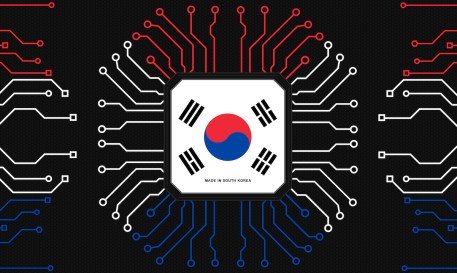
In a groundbreaking move, South Korea has announced its 'AI for All Project,' becoming the first nation to offer artificial intelligence as a public utility. This initiative will grant all 52 million residents free, unlimited access to an AI chatbot, akin to existing public services such as broadband and education. The program, spearheaded by the Ministry of Science and ICT, is set to launch a public beta in late September, with a full rollout expected by year-end. Deputy Prime Minister and Science Minister Bae Kyung-hoon emphasized that this initiative represents a pivotal shift in how AI can serve as a fundamental tool for citizens, likening it to the calculators and computers of previous technological eras.
The 'AI for All' initiative comprises two phases. The first phase will introduce a general-purpose chatbot designed to assist users with everyday inquiries and drafting tasks. The second phase is particularly innovative, featuring a proactive AI agent that assesses individual circumstances to identify and facilitate access to government benefits and administrative programs. This agent is expected to streamline processes by notifying citizens of their eligibility and handling application paperwork on their behalf, with plans to evolve into a one-agent-per-citizen model by 2027.
To ensure the program's alignment with national interests, the operators selected to manage the service must utilize a minimum of 80% domestic AI models, fostering participation among South Korean tech companies. This requirement stems from the country's strategic investment in developing a robust AI supply chain, supported by the AI Basic Act, which lays the legal groundwork for promoting AI as a public benefit. Currently, only a small fraction of South Koreans pay for commercial AI subscriptions, highlighting a significant opportunity for expanding access to generative AI, particularly among digitally vulnerable populations.
As other governments grapple with AI regulation and oversight, South Korea's initiative stands out as a unique approach to democratizing technology access. If successful, 'AI for All' could serve as a model for other nations, demonstrating how AI can be integrated into public infrastructure, funded by the state rather than through commercial subscriptions. This could fundamentally alter the landscape of public service delivery and technology utilization across the globe.
The 'AI for All' initiative comprises two phases. The first phase will introduce a general-purpose chatbot designed to assist users with everyday inquiries and drafting tasks. The second phase is particularly innovative, featuring a proactive AI agent that assesses individual circumstances to identify and facilitate access to government benefits and administrative programs. This agent is expected to streamline processes by notifying citizens of their eligibility and handling application paperwork on their behalf, with plans to evolve into a one-agent-per-citizen model by 2027.
To ensure the program's alignment with national interests, the operators selected to manage the service must utilize a minimum of 80% domestic AI models, fostering participation among South Korean tech companies. This requirement stems from the country's strategic investment in developing a robust AI supply chain, supported by the AI Basic Act, which lays the legal groundwork for promoting AI as a public benefit. Currently, only a small fraction of South Koreans pay for commercial AI subscriptions, highlighting a significant opportunity for expanding access to generative AI, particularly among digitally vulnerable populations.
As other governments grapple with AI regulation and oversight, South Korea's initiative stands out as a unique approach to democratizing technology access. If successful, 'AI for All' could serve as a model for other nations, demonstrating how AI can be integrated into public infrastructure, funded by the state rather than through commercial subscriptions. This could fundamentally alter the landscape of public service delivery and technology utilization across the globe.
Source: PYMNTS