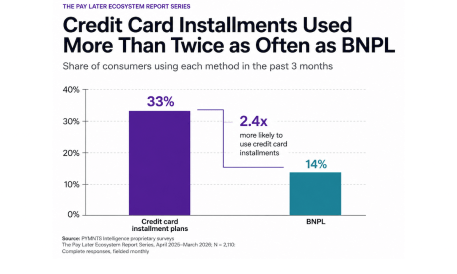
Recent research from PYMNTS Intelligence reveals a significant shift in consumer payment preferences, with 33% of US consumers opting for credit card installment plans by March 2026, a notable increase from 23% in April 2025. This trend underscores a growing inclination towards integrating installment options within existing credit card accounts, rather than relying on standalone buy now, pay later (BNPL) services. The data indicates that consumers are not abandoning BNPL, but rather gravitating towards the convenience offered by credit card issuers who can seamlessly incorporate these features into their established payment relationships. Notably, Gen Z consumers are leading this shift, with 47% utilizing credit card installments compared to just 23% who chose BNPL during the same period.
Moreover, the findings highlight an interesting income dynamic; consumers earning over $150,000 are more likely to utilize BNPL compared to those earning less than $50,000, suggesting that BNPL is perceived less as a financial safety net and more as a cash flow management tool. This evolving landscape indicates that banks, card networks, and fintech firms are increasingly viewing Pay Later options as integral features of broader financial services rather than as standalone offerings. The establishment of consumer demand for predictable payment structures has allowed credit card issuers to capture this market effectively from within their existing customer bases.
The implications of these trends are profound, particularly for fintech startups and investors in the Gulf region. As consumer preferences shift towards integrated financial solutions, there is an opportunity for local fintech companies to innovate and develop services that cater to this demand. The competitive landscape may see traditional banks and new entrants alike enhancing their offerings to include flexible payment options, potentially reshaping the future of consumer finance in the region.
Moreover, the findings highlight an interesting income dynamic; consumers earning over $150,000 are more likely to utilize BNPL compared to those earning less than $50,000, suggesting that BNPL is perceived less as a financial safety net and more as a cash flow management tool. This evolving landscape indicates that banks, card networks, and fintech firms are increasingly viewing Pay Later options as integral features of broader financial services rather than as standalone offerings. The establishment of consumer demand for predictable payment structures has allowed credit card issuers to capture this market effectively from within their existing customer bases.
The implications of these trends are profound, particularly for fintech startups and investors in the Gulf region. As consumer preferences shift towards integrated financial solutions, there is an opportunity for local fintech companies to innovate and develop services that cater to this demand. The competitive landscape may see traditional banks and new entrants alike enhancing their offerings to include flexible payment options, potentially reshaping the future of consumer finance in the region.
Source: PYMNTS