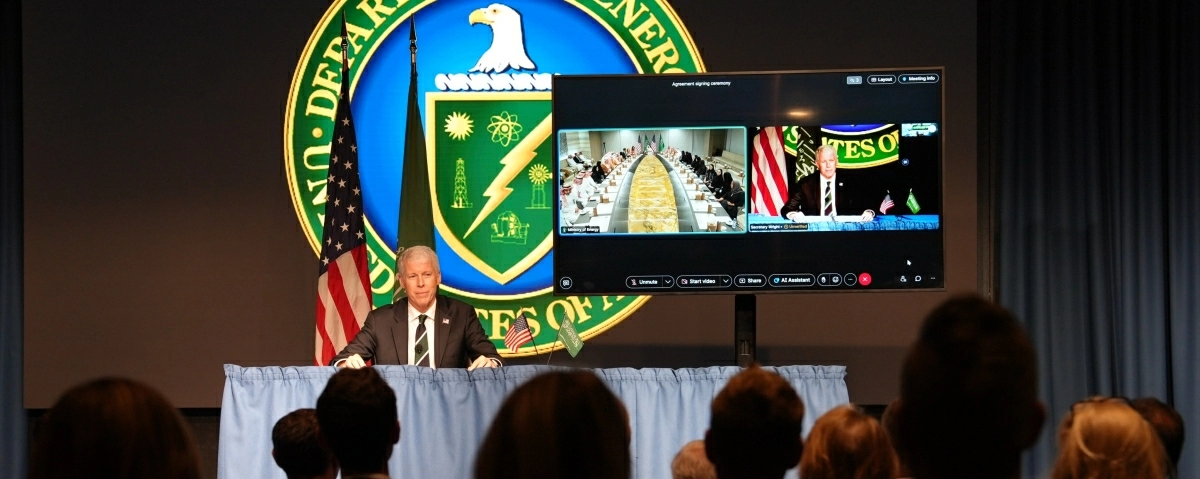
In a significant development for both energy and international relations, Saudi Arabia and the United States have formalized a civilian nuclear cooperation agreement, commonly referred to as a 123 Agreement. Signed by Saudi Minister of Energy Prince Abdulaziz bin Salman and U.S. Energy Secretary Chris Wright, this landmark deal establishes a legal framework for a sustained partnership focused on the Kingdom's peaceful nuclear energy program. The agreement not only aims to bolster Saudi Arabia's energy infrastructure but also aligns with international standards for nuclear safety, security, and nonproliferation, reflecting a shared commitment to responsible energy development.
The implications of this agreement extend beyond mere energy production; it opens avenues for American companies to engage in Saudi Arabia's burgeoning nuclear sector. The U.S. Department of Energy has emphasized that this partnership will enhance American competitiveness in civilian nuclear technology, potentially leading to increased exports and job creation within the United States. Furthermore, the agreement is positioned as a mechanism to reinforce regional security through stringent safety standards, thereby fostering a stable environment for investment and development in the Gulf.
This collaboration is seen as a strategic move to deepen the U.S.-Saudi relationship, particularly in light of the Kingdom's ambitions to diversify its energy sources and reduce reliance on oil. By leveraging advanced U.S. nuclear technology, Saudi Arabia aims to meet its growing energy demands while adhering to global nonproliferation norms. The agreement is also expected to facilitate a broader dialogue on energy cooperation between the two nations, potentially influencing future investments in renewable energy and technology sectors.
Overall, the signing of this agreement marks a crucial step in the evolution of Saudi Arabia's energy landscape, with potential ripple effects across the Gulf region. Investors and stakeholders in the energy sector should closely monitor developments, as this partnership could reshape market dynamics and attract significant foreign investment into the Kingdom's energy infrastructure.
The implications of this agreement extend beyond mere energy production; it opens avenues for American companies to engage in Saudi Arabia's burgeoning nuclear sector. The U.S. Department of Energy has emphasized that this partnership will enhance American competitiveness in civilian nuclear technology, potentially leading to increased exports and job creation within the United States. Furthermore, the agreement is positioned as a mechanism to reinforce regional security through stringent safety standards, thereby fostering a stable environment for investment and development in the Gulf.
This collaboration is seen as a strategic move to deepen the U.S.-Saudi relationship, particularly in light of the Kingdom's ambitions to diversify its energy sources and reduce reliance on oil. By leveraging advanced U.S. nuclear technology, Saudi Arabia aims to meet its growing energy demands while adhering to global nonproliferation norms. The agreement is also expected to facilitate a broader dialogue on energy cooperation between the two nations, potentially influencing future investments in renewable energy and technology sectors.
Overall, the signing of this agreement marks a crucial step in the evolution of Saudi Arabia's energy landscape, with potential ripple effects across the Gulf region. Investors and stakeholders in the energy sector should closely monitor developments, as this partnership could reshape market dynamics and attract significant foreign investment into the Kingdom's energy infrastructure.
Source: Saudi Gazette