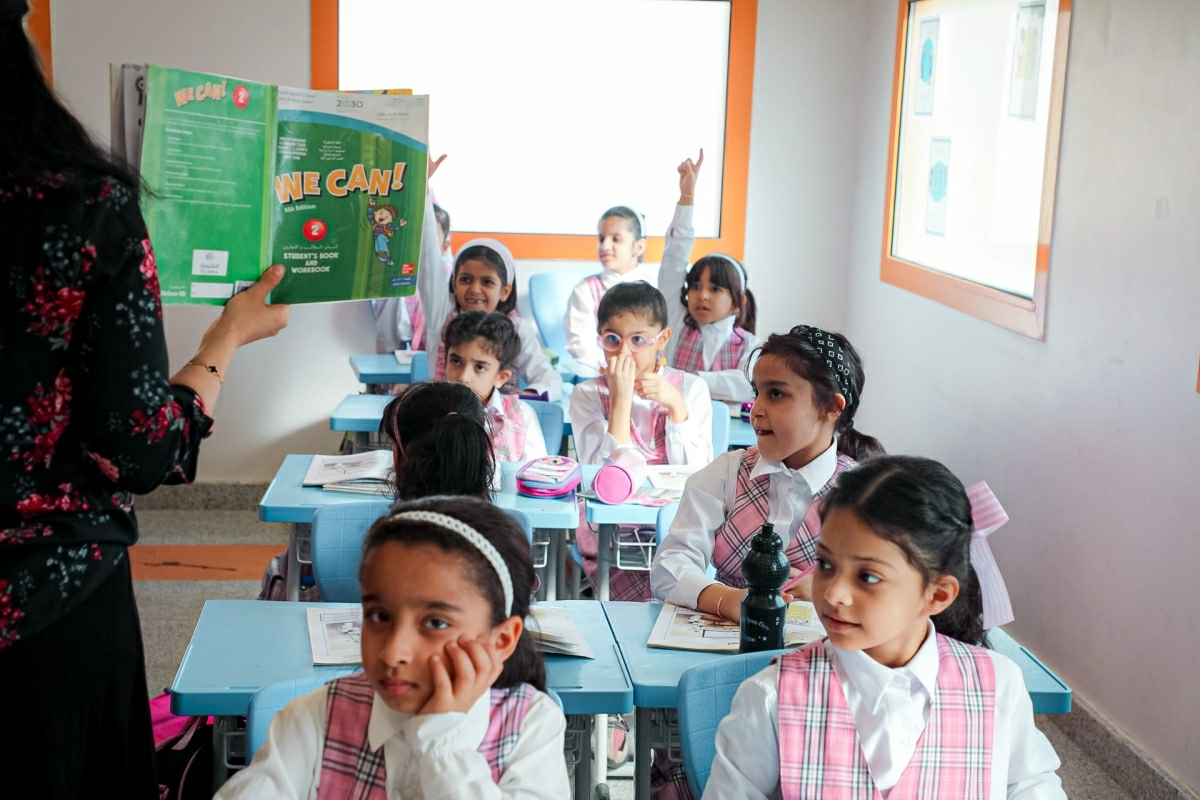
Saudi Arabia has enacted a transformative General Education Law that establishes a comprehensive framework for K-12 education, impacting governance, quality standards, and private sector engagement. A notable aspect of the law is the formation of the General Education Affairs Council, which will oversee national education policies and long-term strategies, including the regulation of private and virtual schools. This council is tasked with ensuring that the education system aligns with the Kingdom’s Vision 2030, emphasizing the need for a robust educational infrastructure capable of meeting future labor market demands.
The law maintains compulsory education from ages six to fifteen and reinforces the use of Arabic as the primary language of instruction, while also allowing for additional languages. Importantly, it emphasizes in-person learning as the standard mode of education, while recognizing the role of educational technology in enhancing learning experiences. The Ministry of Education will have the authority to create specialized educational pathways, catering to diverse student needs and labor market requirements, thereby promoting a more adaptable education system.
Further, the legislation strengthens protections for students with disabilities and enhances programs for gifted learners, ensuring that all students receive appropriate educational support. Private schools will now face stricter quality assurance requirements, including mandatory accreditation from recognized bodies, thereby raising the overall educational standards across the sector. Additionally, the law introduces a formal disciplinary framework for educators and institutions, aiming to uphold accountability and integrity within the education system.
Overall, the new law represents a significant shift towards a more regulated and quality-focused educational landscape in Saudi Arabia, with an emphasis on collaboration between public and private sectors. This reform is poised to not only improve educational outcomes but also create opportunities for investment in educational technology and services, aligning with the Kingdom's broader economic diversification goals.
The law maintains compulsory education from ages six to fifteen and reinforces the use of Arabic as the primary language of instruction, while also allowing for additional languages. Importantly, it emphasizes in-person learning as the standard mode of education, while recognizing the role of educational technology in enhancing learning experiences. The Ministry of Education will have the authority to create specialized educational pathways, catering to diverse student needs and labor market requirements, thereby promoting a more adaptable education system.
Further, the legislation strengthens protections for students with disabilities and enhances programs for gifted learners, ensuring that all students receive appropriate educational support. Private schools will now face stricter quality assurance requirements, including mandatory accreditation from recognized bodies, thereby raising the overall educational standards across the sector. Additionally, the law introduces a formal disciplinary framework for educators and institutions, aiming to uphold accountability and integrity within the education system.
Overall, the new law represents a significant shift towards a more regulated and quality-focused educational landscape in Saudi Arabia, with an emphasis on collaboration between public and private sectors. This reform is poised to not only improve educational outcomes but also create opportunities for investment in educational technology and services, aligning with the Kingdom's broader economic diversification goals.
Source: Saudi Gazette