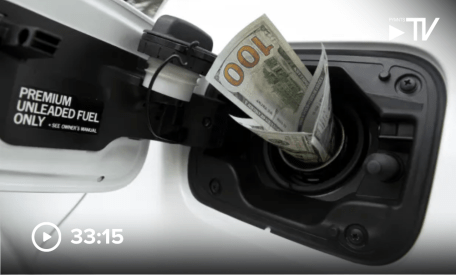
The latest Consumer Price Index (CPI) report reveals a significant 0.4% decline in overall prices for June, the first monthly decrease in over two years. This drop, primarily driven by a 5.7% fall in the energy index, including a substantial 9.7% decrease in gasoline prices, suggests a potential easing of inflationary pressures. However, even with this decline, gasoline prices remain 26.7% higher than a year ago, indicating that consumers are still facing elevated costs at the pump. In contrast, food prices have continued to rise, reflecting a 0.2% monthly increase and a 3% uptick year-over-year, while shelter costs have shown only modest growth. Core inflation, which excludes food and energy, has remained flat for the first time since June 2021, signaling a complex economic landscape for consumers.
Despite the apparent relief from falling prices, research from PYMNTS Intelligence indicates that the relationship between inflation and consumer spending has become increasingly convoluted. The report highlights that recent increases in consumer spending have been largely driven by rising prices rather than genuine demand growth. For instance, data shows that a significant portion of April's spending increase was attributable to higher prices, with real purchasing volume contributing minimally. This suggests that consumers are spending more without a corresponding increase in the quantity of goods and services acquired, a troubling trend for the economy.
Moreover, household financial health appears to be deteriorating, as personal income stagnated in April and the personal savings rate fell to its lowest level since mid-2022. This raises concerns that consumers are relying on dwindling savings to maintain spending levels, which could lead to further economic strain. The PYMNTS survey reflects this sentiment, with many consumers expressing hesitance towards making major purchases and a significant proportion indicating they lack sufficient savings to cover unexpected expenses. As such, while the CPI figures may suggest a cooling inflationary environment, the underlying consumer sentiment remains fraught with uncertainty and financial pressure.
For retailers and financial institutions, this presents a challenging scenario. The headline CPI decline does not necessarily translate to increased consumer spending, as households continue to navigate financial constraints. The evolving economic landscape requires businesses to adapt their strategies, focusing on understanding consumer behavior amid these pressures. As the Gulf region continues to recover from the pandemic, the implications of these trends on consumer spending patterns could significantly influence market dynamics and investment strategies.
Despite the apparent relief from falling prices, research from PYMNTS Intelligence indicates that the relationship between inflation and consumer spending has become increasingly convoluted. The report highlights that recent increases in consumer spending have been largely driven by rising prices rather than genuine demand growth. For instance, data shows that a significant portion of April's spending increase was attributable to higher prices, with real purchasing volume contributing minimally. This suggests that consumers are spending more without a corresponding increase in the quantity of goods and services acquired, a troubling trend for the economy.
Moreover, household financial health appears to be deteriorating, as personal income stagnated in April and the personal savings rate fell to its lowest level since mid-2022. This raises concerns that consumers are relying on dwindling savings to maintain spending levels, which could lead to further economic strain. The PYMNTS survey reflects this sentiment, with many consumers expressing hesitance towards making major purchases and a significant proportion indicating they lack sufficient savings to cover unexpected expenses. As such, while the CPI figures may suggest a cooling inflationary environment, the underlying consumer sentiment remains fraught with uncertainty and financial pressure.
For retailers and financial institutions, this presents a challenging scenario. The headline CPI decline does not necessarily translate to increased consumer spending, as households continue to navigate financial constraints. The evolving economic landscape requires businesses to adapt their strategies, focusing on understanding consumer behavior amid these pressures. As the Gulf region continues to recover from the pandemic, the implications of these trends on consumer spending patterns could significantly influence market dynamics and investment strategies.
Source: PYMNTS