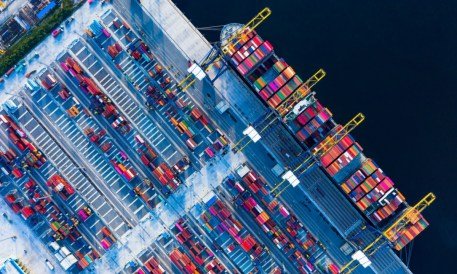
Recent data from the Federal Reserve Bank of New York indicates a notable easing of global supply chain pressures, with its Global Supply Chain Pressure Index decreasing to 1.25 from a revised 1.81 in May. This decline follows a peak earlier in the year, which was driven by geopolitical tensions, notably the U.S.-Iran conflict that disrupted trade through the vital Strait of Hormuz. As the situation stabilizes and trade routes reopen, economists are optimistic that inflationary pressures may begin to recede, particularly in energy and related goods. New York Fed President John Williams has acknowledged the current elevated inflation levels but expressed confidence that, barring further disruptions, prices should stabilize and potentially decrease later this year.
In a related development, the integration of artificial intelligence in supply chain management is gaining traction as companies seek to mitigate disruptions. C.H. Robinson has recently launched an AI system capable of assessing entire supply chains in a fraction of the time required by traditional methods, enabling businesses to identify and address potential issues proactively. This innovation is particularly relevant given that supply chain disruptions are estimated to cost businesses approximately $184 billion annually, with significant losses stemming from delays in problem identification and response.
Furthermore, research from McKinsey highlights that enhanced visibility in supply chains can lead to substantial improvements in inventory management and cost reductions. Manufacturers that have adopted more transparent supply chain practices report inventory turns increasing by 15 to 20% and expedited service costs decreasing by 30 to 50%. These efficiencies not only free up working capital but also bolster margins, making them critical for businesses navigating the current economic landscape.
In a related development, the integration of artificial intelligence in supply chain management is gaining traction as companies seek to mitigate disruptions. C.H. Robinson has recently launched an AI system capable of assessing entire supply chains in a fraction of the time required by traditional methods, enabling businesses to identify and address potential issues proactively. This innovation is particularly relevant given that supply chain disruptions are estimated to cost businesses approximately $184 billion annually, with significant losses stemming from delays in problem identification and response.
Furthermore, research from McKinsey highlights that enhanced visibility in supply chains can lead to substantial improvements in inventory management and cost reductions. Manufacturers that have adopted more transparent supply chain practices report inventory turns increasing by 15 to 20% and expedited service costs decreasing by 30 to 50%. These efficiencies not only free up working capital but also bolster margins, making them critical for businesses navigating the current economic landscape.
Source: PYMNTS