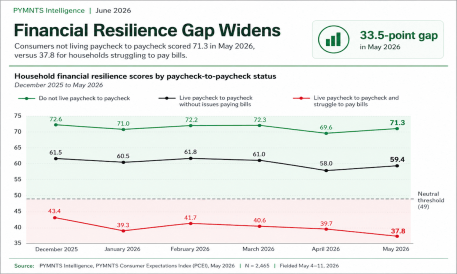
A significant portion of consumers is grappling with financial strain, leading to a notable reduction in nonessential spending. According to the latest PYMNTS Consumer Expectations Index, 53% of financially constrained consumers reported spending less on dining, entertainment, and travel over the past year. This trend comes against a backdrop of rising prices, which have inflated nominal consumer spending figures, obscuring the reality of stagnant real purchasing power. In April, while nominal spending increased by 0.5%, nearly all of that growth was attributed to higher prices rather than increased consumption, indicating that consumers are paying more for the same goods and services rather than expanding their purchases.
The report underscores the precarious financial situation many households face, with 43% of consumers living paycheck to paycheck unable to cover a $1,200 emergency expense within a week. Moreover, the personal savings rate has plummeted, with many financially strained individuals indicating that their savings would last a month or less if they missed work. This stark divide in financial resilience is evident, as those who can manage their bills still maintain a relatively healthier financial outlook compared to their struggling counterparts.
For financial institutions and businesses, the implications are clear: while consumers remain active in the marketplace, their spending habits are evolving. They are becoming more selective and price-sensitive, seeking tools to manage their cash flow and expenses effectively. As a result, companies in the fintech and payments sectors have an opportunity to innovate and cater to these changing consumer needs, potentially developing solutions that enhance financial management and resilience. Understanding these dynamics will be crucial for investors and founders looking to navigate the shifting landscape of consumer finance in the Gulf region.
The report underscores the precarious financial situation many households face, with 43% of consumers living paycheck to paycheck unable to cover a $1,200 emergency expense within a week. Moreover, the personal savings rate has plummeted, with many financially strained individuals indicating that their savings would last a month or less if they missed work. This stark divide in financial resilience is evident, as those who can manage their bills still maintain a relatively healthier financial outlook compared to their struggling counterparts.
For financial institutions and businesses, the implications are clear: while consumers remain active in the marketplace, their spending habits are evolving. They are becoming more selective and price-sensitive, seeking tools to manage their cash flow and expenses effectively. As a result, companies in the fintech and payments sectors have an opportunity to innovate and cater to these changing consumer needs, potentially developing solutions that enhance financial management and resilience. Understanding these dynamics will be crucial for investors and founders looking to navigate the shifting landscape of consumer finance in the Gulf region.
Source: PYMNTS